OpenRouter 作為一個統一的閘道,可以存取來自各種供應商(包括 OpenAI、Anthropic 和 Google)的多樣化 AI 模型。@aigne/open-router 套件提供了一個標準化介面,可將這些模型整合到 AIGNE 框架中。這使得開發者能夠以最少的程式碼變更在不同模型之間切換,並實現穩健的備援機制。
本指南詳細介紹了安裝、設定和使用 @aigne/open-router 套件以利用多個 AI 模型的過程。
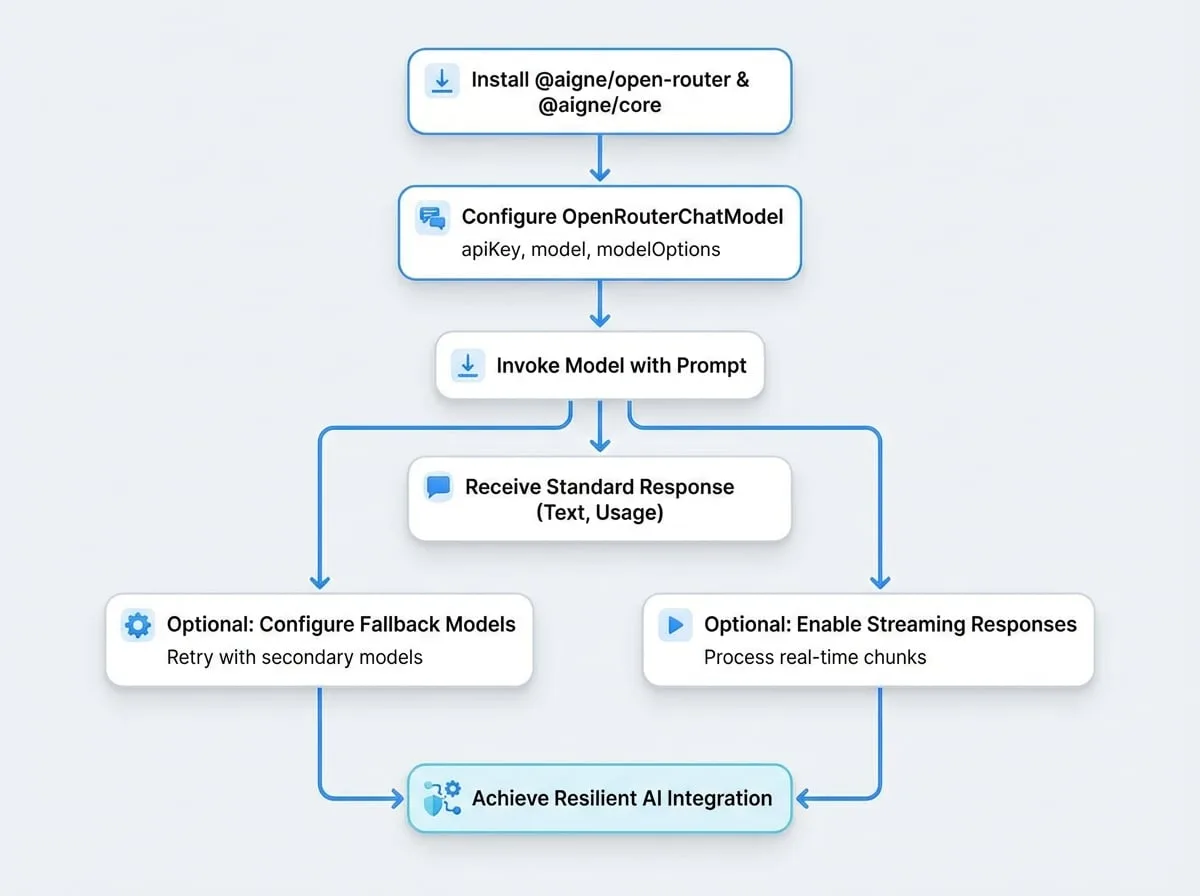
安裝
首先,請安裝 @aigne/open-router 和 @aigne/core 套件。以下指令展示了如何使用 npm、yarn 和 pnpm 進行安裝。
npm
npm install @aigne/open-router @aigne/coreyarn
yarn add @aigne/open-router @aigne/corepnpm
pnpm add @aigne/open-router @aigne/core設定與使用
OpenRouterChatModel 類別是與 OpenRouter API 互動的主要介面。若要使用它,您必須提供您的 OpenRouter API 金鑰。這可以直接在建構函式中透過 apiKey 選項提供,或透過設定 OPEN_ROUTER_API_KEY 環境變數來完成。
基本範例
以下是使用 OpenRouterChatModel 發送聊天請求的標準實作。此範例使用了 Anthropic 的 claude-3-opus 模型。
基本用法
import { OpenRouterChatModel } from "@aigne/open-router";

const model = new OpenRouterChatModel({
  // 直接提供 API 金鑰,或使用環境變數 OPEN_ROUTER_API_KEY
  apiKey: "your-api-key", // 如果已在環境變數中設定,則為可選項目
  // 指定模型(預設為 'openai/gpt-4o')
  model: "anthropic/claude-3-opus",
  modelOptions: {
    temperature: 0.7,
  },
});

const result = await model.invoke({
  messages: [{ role: "user", content: "Which model are you using?" }],
});

console.log(result);
預期輸出將包含文字回應、模型識別碼和 token 使用指標。
輸出
{
  "text": "I am currently using the anthropic/claude-3-opus model, accessed through OpenRouter.",
  "model": "anthropic/claude-3-opus",
  "usage": {
    "inputTokens": 15,
    "outputTokens": 23
  }
}
建構函式選項
OpenRouterChatModel 擴充自 @aigne/openai 套件的 OpenAIChatModel,並接受相同的建構函式選項。
- apiKey
string— 您的 OpenRouter API 金鑰。若未提供,客戶端將檢查 OPEN_ROUTER_API_KEY 環境變數。 - model
string(default:openai/gpt-4o) — 您希望使用的模型識別碼(例如:anthropic/claude-3-opus)。 - fallbackModels
string[]— 一個模型識別碼陣列,用於在主要模型失敗時作為備援。 - baseURL
string(default:https://openrouter.ai/api/v1) — OpenRouter API 的基礎 URL。可為測試或代理伺服器而覆寫。 - modelOptions
object— 一個包含要傳遞給模型供應商參數的物件,例如 temperature、max_tokens 或 top_p。
使用多個模型與備援機制
@aigne/open-router 套件的一個關鍵功能是能夠指定備援模型。如果主要模型的請求失敗,系統將自動使用 fallbackModels 列表中的下一個模型重試請求。這確保了更高的應用程式可靠性。
模型備援
import { OpenRouterChatModel } from "@aigne/open-router";

const modelWithFallbacks = new OpenRouterChatModel({
  apiKey: "your-api-key",
  model: "openai/gpt-4o",
  fallbackModels: ["anthropic/claude-3-opus", "google/gemini-1.5-pro"], // 備援順序
  modelOptions: {
    temperature: 0.7,
  },
});

// 會先嘗試 gpt-4o,若失敗則嘗試 claude-3-opus,再失敗則嘗試 gemini-1.5-pro
const fallbackResult = await modelWithFallbacks.invoke({
  messages: [{ role: "user", content: "Which model are you using?" }],
});

console.log(fallbackResult);
串流回應
對於需要即時互動的應用程式,您可以啟用串流功能,以便在回應區塊可用時立即處理。在 invoke 方法中設定 streaming: true 選項。
必須對回應串流進行迭代,以組合出完整的訊息。
串流範例
import { isAgentResponseDelta } from "@aigne/core";
import { OpenRouterChatModel } from "@aigne/open-router";

const model = new OpenRouterChatModel({
  apiKey: "your-api-key",
  model: "anthropic/claude-3-opus",
});

const stream = await model.invoke(
  {
    messages: [{ role: "user", content: "Which model are you using?" }],
  },
  { streaming: true },
);

let fullText = "";
const json = {};

for await (const chunk of stream) {
  if (isAgentResponseDelta(chunk)) {
    const text = chunk.delta.text?.text;
    if (text) fullText += text;
    if (chunk.delta.json) Object.assign(json, chunk.delta.json);
  }
}

console.log(fullText);
console.log(json);
最終的 fullText 和 json 物件將包含匯總後的回應資料。
輸出
I am currently using the anthropic/claude-3-opus model, accessed through OpenRouter.
{ model: 'anthropic/claude-3-opus', usage: { inputTokens: 15, outputTokens: 23 } }
總結
@aigne/open-router 套件透過一個統一且具彈性的介面,簡化了對各種語言模型的存取。透過利用模型備援和串流等功能,您可以建構更穩健、回應更快的 AI 應用程式。
關於 AIGNE 框架中模型的基本概念的更多資訊,請參考模型概覽。