In the AIGNE Framework, a single agent can perform a specific task. However, the true power of the system is realized when multiple agents collaborate to solve more complex problems. Just like members of a team, agents can be organized to work together in structured ways. These patterns of collaboration are called "workflows."
Workflows define how tasks and information flow between different agents to achieve a larger goal. By arranging agents in different patterns, we can create sophisticated automated processes for various business needs.
The diagram below illustrates three fundamental workflow patterns.
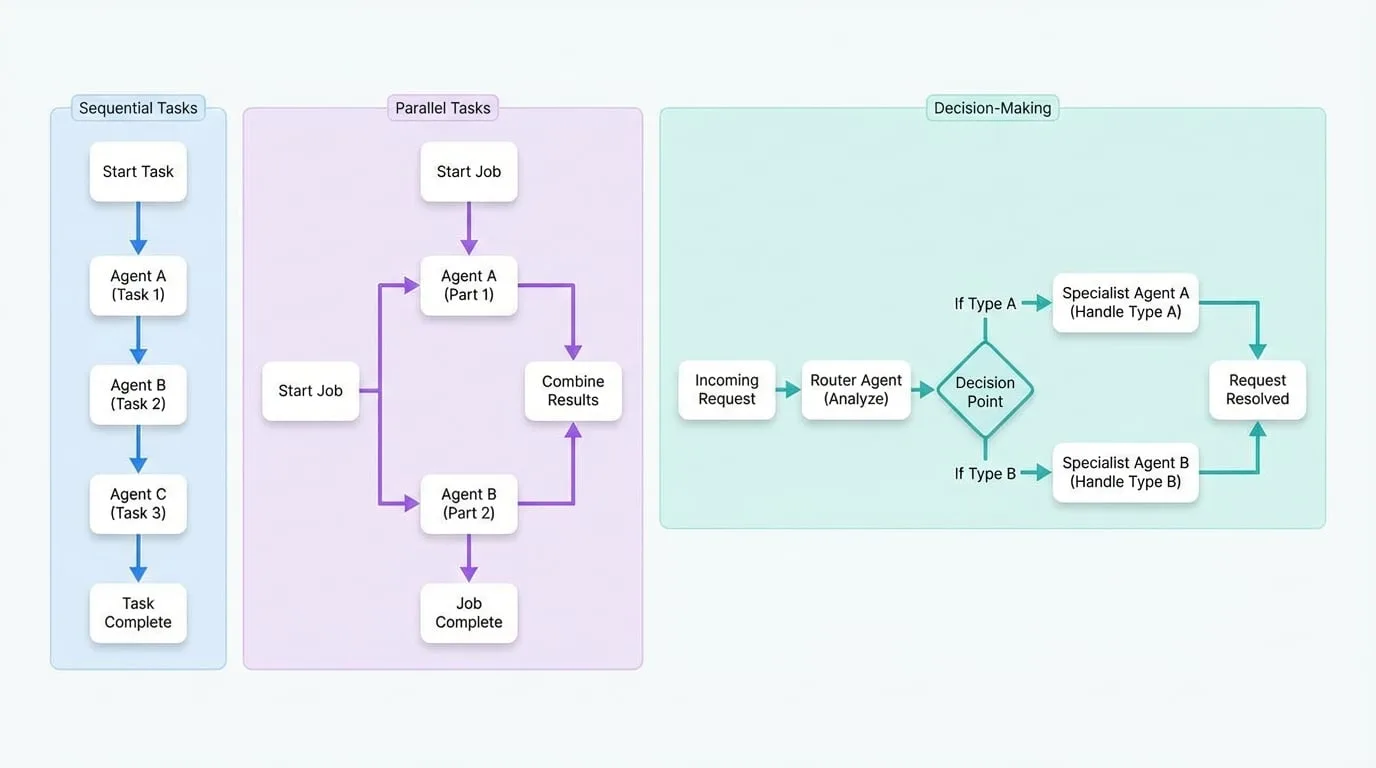
This guide introduces the most common workflows you'll encounter. Understanding these patterns will help you visualize how agents can automate complex, multi-step processes for you.
Explore the detailed explanations for each workflow to learn more about their specific use cases and benefits.
Sequential Tasks
Like an assembly line, agents complete tasks one after another, passing their work to the next agent in line. This is ideal for processes that must happen in a specific order.
Parallel Tasks
To get things done faster, multiple agents can work on different parts of a job at the same time. Their individual results are then combined to form a complete solution.
Decision-Making
Just like a manager, one agent can analyze an incoming request and intelligently route it to the most suitable specialist agent to handle the job.
By combining these fundamental patterns, you can build powerful and autonomous systems tailored to your specific needs. Click on any card to dive deeper into how each workflow operates.