AIAgent 是与大语言模型 (LLM) 交互的主要组件。它充当 ChatModel 的直接接口,支持复杂的对话式 AI、函数调用(工具使用)和结构化数据提取。该 Agent 负责处理提示词构建、模型调用、响应解析和工具执行循环等复杂任务。
本指南全面概述了 AIAgent、其配置及其核心功能。要更广泛地了解 Agent 如何融入 AIGNE 框架,请参阅 Agent 核心概念指南。
工作原理
AIAgent 遵循一个系统化的流程来处理用户输入并生成响应。这个过程通常涉及与 LLM 的多次交互,尤其是在使用工具时。
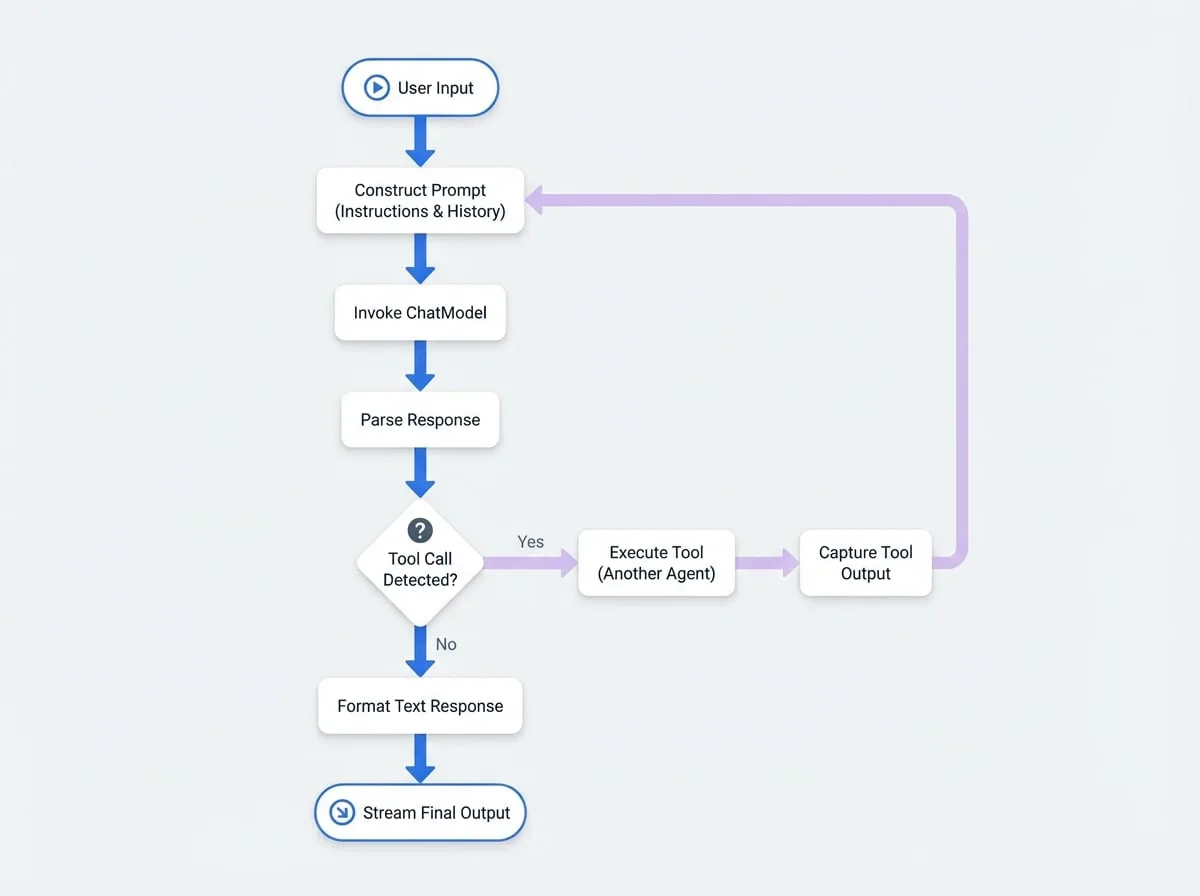
上图说明了一个请求的典型生命周期:
- 提示词构建:
AIAgent使用PromptBuilder从其instructions、用户输入以及任何先前工具调用的历史记录中组装最终的提示词。 - 模型调用:完全成形的提示词被发送到配置好的
ChatModel。 - 响应解析:Agent 接收模型的原始输出。
- 工具调用检测:它会检查响应是否包含调用工具的请求。
- 如果否,Agent 会格式化文本响应并返回。
- 如果是,它将进入工具执行循环。
- 工具执行:Agent 识别并调用所请求的工具(这是另一个 Agent),捕获其输出,并将其格式化为发送给模型的消息。然后,流程循环回到步骤 1,将工具的结果发送回模型以进行下一步的生成。
- 最终输出:一旦模型生成了没有任何工具调用的最终文本响应,Agent 会将其格式化并以流式方式返回给用户。
配置
AIAgent 通过其构造函数选项进行配置。以下是可用参数的详细说明。
- instructions
string | PromptBuilder— 指导 AI 模型行为的核心指令。可以是一个简单的字符串,也可以是一个用于创建复杂动态提示词的 PromptBuilder 实例。更多详情请参阅 提示词 指南。 - inputKey
string— 指定输入消息对象中的哪个键应被视为主用户查询。如果未设置,则必须提供 instructions。 - outputKey
string(default:message) — 定义 Agent 的最终文本响应将放置在输出对象中的键。默认为 message。 - inputFileKey
string— 指定输入消息中包含要发送给模型的文件数据的键。 - outputFileKey
string(default:files) — 定义模型生成的任何文件将放置在输出对象中的键。默认为 files。 - toolChoice
AIAgentToolChoice | Agent(default:auto) — 控制 Agent 如何使用其可用工具(技能)。详情请参阅下文的“工具使用”部分。 - toolCallsConcurrency
number(default:1) — 单轮中可并发执行的工具调用最大数量。 - catchToolsError
boolean(default:true) — 如果为 true,Agent 将捕获工具执行中的错误,并将错误消息反馈给模型。如果为 false,错误将中止整个过程。 - structuredStreamMode
boolean(default:false) — 启用一种模式,用于从模型的流式响应中提取结构化的 JSON 数据。更多信息请参阅“结构化输出”部分。 - memoryAgentsAsTools
boolean(default:false) — 当为 true 时,附加的 MemoryAgent 实例将作为可调用工具暴露给模型,允许 Agent 显式地从其内存中读取或写入数据。
基本示例
以下是一个简单的 AIAgent 示例,配置其作为一个乐于助人的助手。
基本聊天 Agent
import { AIAgent } from "@aigne/core";
import { OpenAI } from "@aigne/openai";

// 配置要使用的模型
const model = new OpenAI({
  apiKey: process.env.OPENAI_API_KEY,
  model: "gpt-4o",
});

// 创建 AI Agent
const chatAgent = new AIAgent({
  instructions: "You are a helpful assistant.",
  inputKey: "question",
  outputKey: "answer",
});

// 要运行此 Agent,您需要使用 AIGNE 的 invoke 方法
// const aigne = new AIGNE({ model });
// const response = await aigne.invoke(chatAgent, { question: "What is AIGNE?" });
// console.log(response.answer);
该 Agent 接收一个带有 question 键的输入对象,并生成一个带有 answer 键的输出对象。
工具使用
AIAgent 的一个强大功能是它能够将其他 Agent 用作工具。通过在调用期间提供 skills 列表,AIAgent 可以决定调用这些工具来收集信息或执行操作。toolChoice 选项决定了此行为。
toolChoice 值 | 描述 |
|---|---|
auto | (默认)模型根据对话上下文决定是否调用工具。 |
none | 完全禁用工具使用。模型不会尝试调用任何工具。 |
required | 强制模型调用一个或多个工具。 |
router | 一种特殊模式,强制模型只选择一个工具。然后,Agent 将请求直接路由到该工具,并将其响应作为最终输出进行流式传输。这对于创建调度器 Agent 非常高效。 |
工具使用示例
假设您有一个可以获取天气信息的 FunctionAgent。您可以将其作为技能提供给 AIAgent。
带工具的 Agent
import { AIAgent, FunctionAgent } from "@aigne/core";
import { OpenAI } from "@aigne/openai";

// 一个获取天气的简单函数
function getCurrentWeather(location) {
  if (location.toLowerCase().includes("tokyo")) {
    return JSON.stringify({ location: "Tokyo", temperature: "15", unit: "celsius" });
  }
  return JSON.stringify({ location, temperature: "unknown" });
}

// 将函数包装在 FunctionAgent 中,使其成为一个工具
const weatherTool = new FunctionAgent({
  name: "get_current_weather",
  description: "Get the current weather in a given location",
  inputSchema: {
    type: "object",
    properties: { location: { type: "string", description: "The city and state" } },
    required: ["location"],
  },
  process: ({ location }) => getCurrentWeather(location),
});

// 配置模型
const model = new OpenAI({
  apiKey: process.env.OPENAI_API_KEY,
  model: "gpt-4o",
});

// 创建一个可以使用天气工具的 AI Agent
const weatherAssistant = new AIAgent({
  instructions: "You are a helpful assistant that can provide weather forecasts.",
  inputKey: "query",
  outputKey: "response",
});

// 调用时,将工具作为技能提供
// const aigne = new AIGNE({ model, skills: [weatherTool] });
// const result = await aigne.invoke(weatherAssistant, { query: "What's the weather like in Tokyo?" });
// console.log(result.response); // LLM 将使用工具的输出进行响应在此场景中,AIAgent 将接收查询,识别出需要天气信息,调用 weatherTool,接收其 JSON 输出,然后使用该数据来组织一个自然语言响应。
结构化输出
对于需要提取特定结构化信息(如情感分析、分类或实体提取)的任务,structuredStreamMode 非常有用。启用后,Agent 会主动解析模型的流式输出,以查找并提取 JSON 对象。
默认情况下,必须指示模型将其结构化数据以 YAML 格式放置在 <metadata>...</metadata> 标签内。
结构化输出示例
此示例配置了一个 Agent,用于分析用户消息的情感并返回一个结构化的 JSON 对象。
结构化情感分析
import { AIAgent } from "@aigne/core";
import { OpenAI } from "@aigne/openai";

const sentimentAnalyzer = new AIAgent({
  instructions: `
    Analyze the sentiment of the user's message.
    Respond with a single word summary, followed by a structured analysis.
    Place the structured analysis in YAML format inside <metadata> tags.
    The structure should contain 'sentiment' (positive, negative, or neutral) and a 'score' from -1.0 to 1.0.
  `,
  inputKey: "message",
  outputKey: "summary",
  structuredStreamMode: true,
});

// 调用时,输出将同时包含文本摘要
// 和解析后的 JSON 对象。
// const aigne = new AIGNE({ model: new OpenAI(...) });
// const result = await aigne.invoke(sentimentAnalyzer, { message: "AIGNE is an amazing framework!" });
/*
  预期结果:
  {
    summary: "Positive.",
    sentiment: "positive",
    score: 0.9
  }
*/
您可以使用 customStructuredStreamInstructions 选项自定义解析逻辑,包括开始/结束标签和解析函数(例如,直接支持 JSON)。
总结
AIAgent 是创建高级 AI 应用程序的基础构建块。它为语言模型提供了一个强大而灵活的接口,并完整支持工具使用、结构化数据提取和内存集成。
对于更复杂的工作流,您可能需要编排多个 Agent。要了解如何操作,请继续阅读 Team Agent 文档。有关高级提示词模板技术,请参阅 提示词 指南。