What Is a Token, Revisited: From Our 2020 Taxonomy of Token Utility to the 2026 Stake-for-X Spectrum
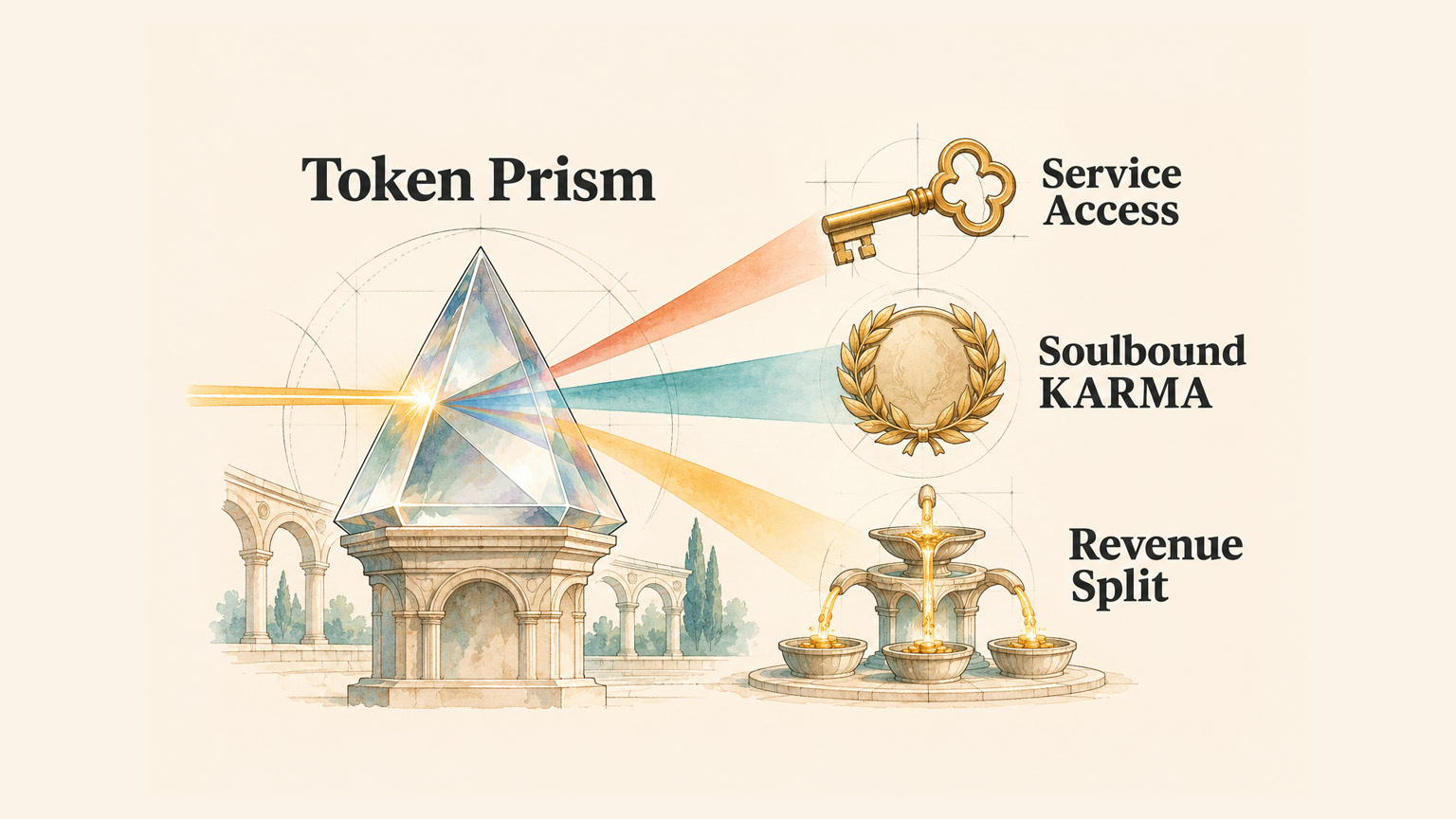
In June 2020, I wrote a long foundational essay trying to clear up one of the biggest conceptual messes in our industry: Cryptocurrency, Cryptoassets, and Token.
Back then, the English word "Token" was being translated and misused in dozen of contradictory ways. People treated every token as a casino chip, which blinded builders to what a cryptographic token actually is in software engineering. In that 2020 article, I returned to the computer science root of the word (like a hardware security token, an authentication session token, or a turn-taking ring token) and wrote:
In software architecture, a token is a programmable, cryptographically verifiable proof of state, permission, or commitment. If the only thing your system knows how to do with a token is "transfer and burn on every click," you haven't designed a token system, you've just welded a coin slot onto a web app.
Six years later, in 2026, when we designed the economic engine of ArcBlock Verifiable Ledger (vLedger), we took that exact 2020 insight and turned it into a composable engineering toolkit: the 5-Mode Stake-for-X Commitment Spectrum.
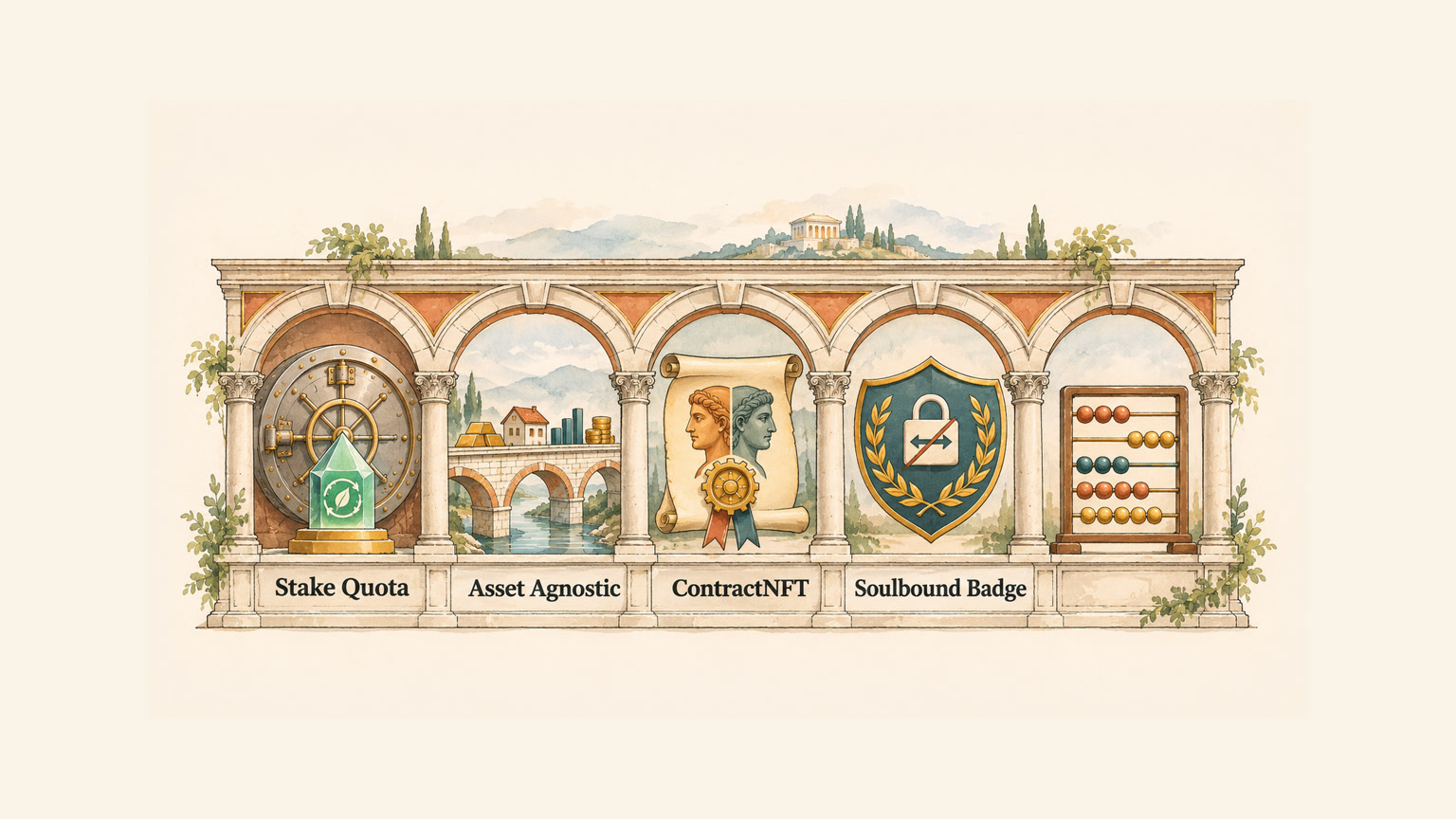
1. Why "Pay-and-Burn on Every Click" Breaks Real-World Software
In our 2020 essay, we pointed out that in the physical world, humans interact with value and trust in many ways beyond handing over cash at a tollbooth:
- Sometimes you show a membership card to enter a lounge (you don't hand the card to the doorkeeper and lose it!);
- Sometimes you put down a refundable security deposit when checking into a hotel or renting equipment, so the provider knows you won't trash the room;
- Sometimes you pre-pay for a package of compute or storage, and the meter ticks down as you consume resources;
- Sometimes a community awards you a non-transferable badge of honor for helping others.
Yet for over a decade, standard blockchain architectures forced every single one of those interactions into a single primitive: pay a transaction fee or transfer a token away forever.
That mismatch is why mainstream users bounce off Web3 apps, and why AI Agents struggle to collaborate safely.
2. The 2026 Answer: One Spectrum, Five Composable Commitment Modes
Instead of asking developers to write custom staking contracts from scratch and risk custody bugs, we built five standard commitment modes directly into the Verifiable Ledger. Think of them as five gears on a transmission that any application builder can shift between:
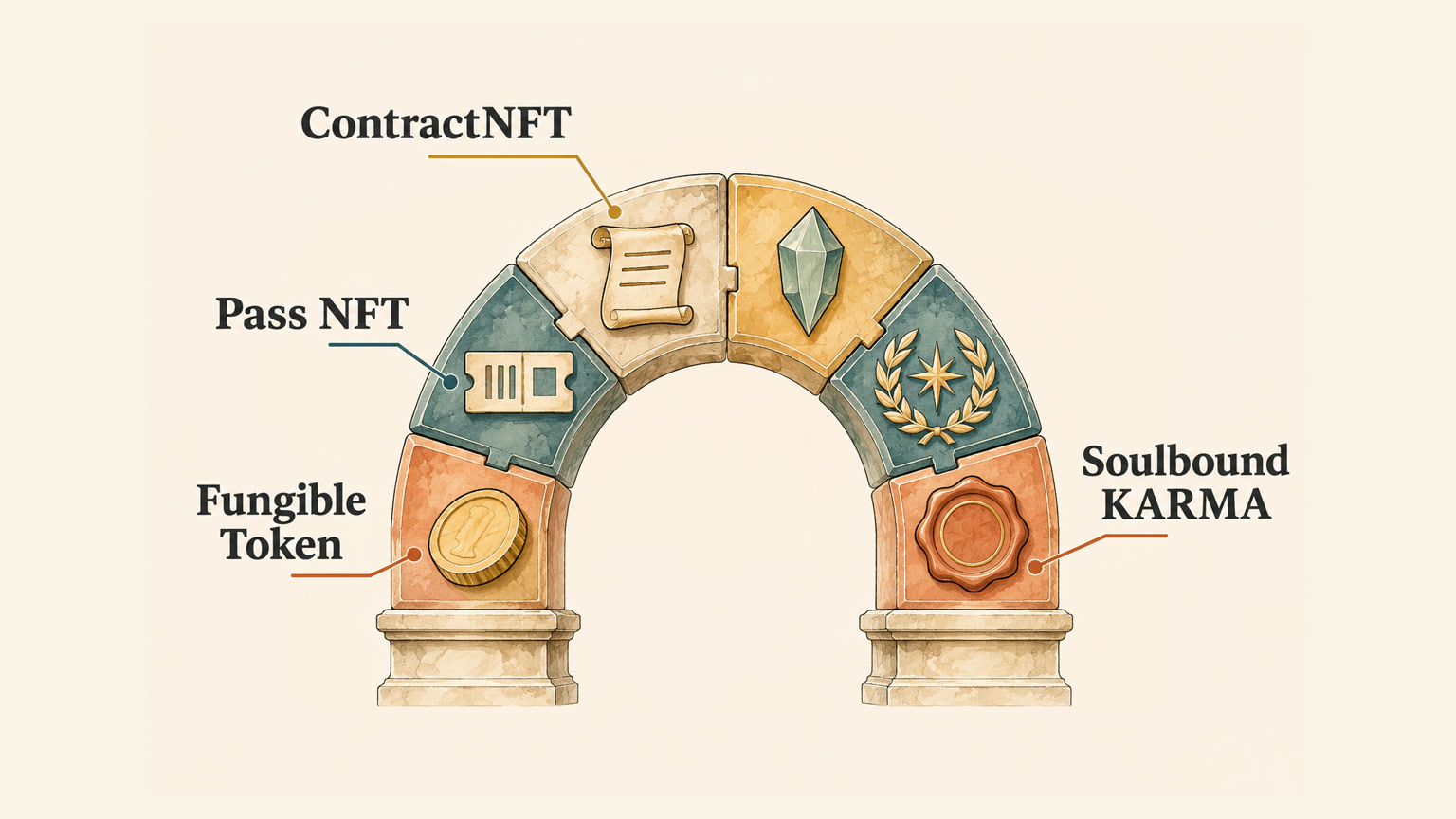
Mode 1: Stake-for-Gas (Hold to Use, Zero Principal Loss)
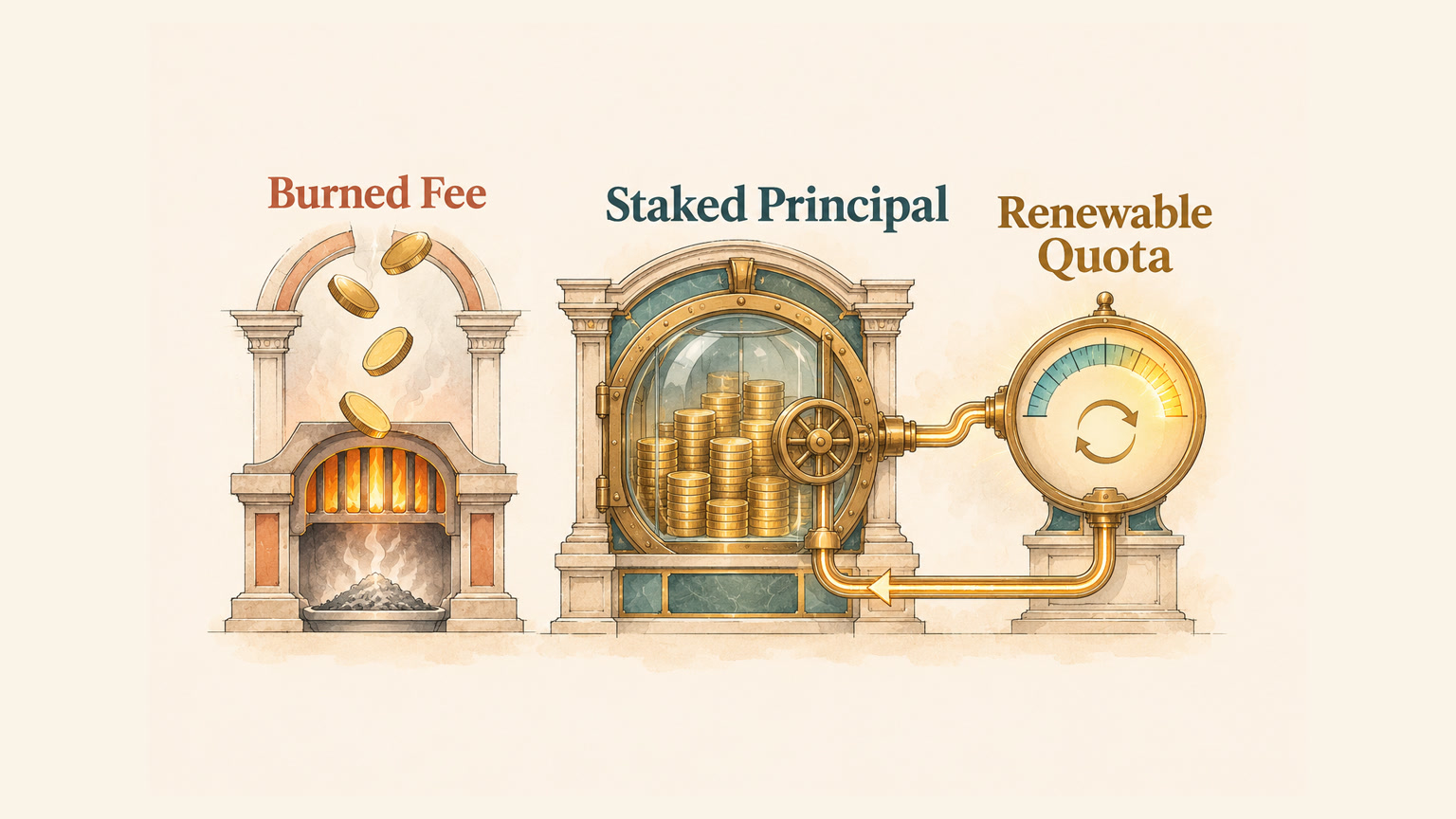
Just like holding a membership pass: a user (or an application creator sponsoring their users) locks tokens into a time-bounded staking vault. While staked, the principal stays 100% intact, and the ledger continuously replenishes a daily free transaction quota based on the staked balance. Everyday interactions become completely gas-free without burning the user's balance.
Mode 2: Stake-for-Service (Prepaid Resource Settlement)
When consuming real external costs, such as AI inference tokens, cloud bandwidth, or storage space in ArcSpace, "free forever" doesn't make physical sense. Here, the user locks a budget into a dedicated service commitment, and the service provider settles only the verified usage against that commitment, returning any unused remainder when the session ends.
Mode 3: Stake-for-Credit (Refundable Security Deposit for AI Agents & APIs)
Suppose your autonomous AI Agent wants to call a high-throughput API or participate in a task marketplace. How does the platform prevent spam or malicious behavior without charging high upfront fees? By requiring a refundable security bond. As long as the Agent follows the protocol rules, 100% of its stake remains safe and withdrawable after the cooldown window.
Mode 4: Stake-for-Access (Time-Bounded Pass & Governance Alignment)
Want to grant access to a builder cohort, an early-access software channel, or a community council? Instead of selling a speculative ticket that scalpers immediately flip, applications can require a time-locked commitment. When the lock period matures, the user gets their principal back while having proven genuine long-term alignment.
Mode 5: Give-to-Mint Reputation (Non-Transferable Gratitude & Soulbound Karma)
As we wrote in 2020, some of the most valuable tokens in human society cannot be bought with money. When you send an appreciative tip or gift to someone on the ledger, the protocol automatically mints non-transferable reputation (Karma) to your identity. Money cannot buy it directly; only generosity and contribution can earn it.
3. How Builders Combine These Five Modes in One Application
The real magic happens when you stop treating these modes in isolation and start composing them together like LEGO bricks.
Imagine you are building a collaborative AI research community on ArcBlock today:
- Onboarding (
Stake-for-Gas): As the community founder, you stake a modest app pool so every new reader can sign in with a Passkey and post annotations with zero gas prompts. - Deep AI Research (
Stake-for-Service): When a member launches a multi-agent research workflow that consumes heavy LLM compute, their personalStake-for-Servicevault settles the exact compute receipts verifiably. - Publishing Verified Skills (
Stake-for-Credit): When a developer publishes a third-party Agent skill to the community directory, they post a smallStake-for-Creditbond to signal quality and accountability. - Rewarding Great Insights (
Give-to-Mint): When community members tip an insightful research note, the author receives the tip while the supporter earns SoulboundKarma, which in turn unlocks higher daily gas quotas!
When you look at our June 2020 article alongside the 2026 Verifiable Ledger, the thread running through all six years is crystal clear: a token was never meant to be just a coin in a slot machine; it is the most versatile state-and-trust primitive in modern software engineering.