Context Is Not Cognition
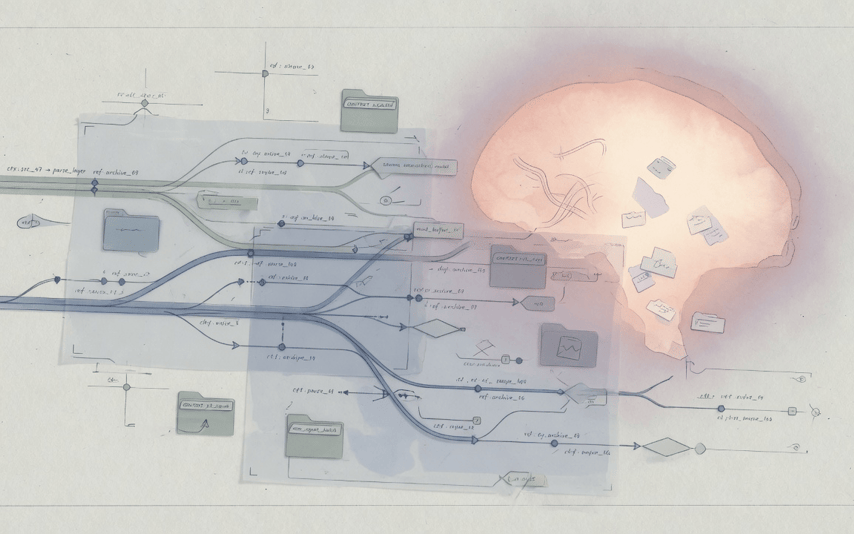
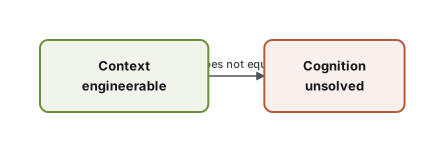
Context can be engineered; cognition is not thereby solved.
A question about AFS gets to a familiar overreach: if we organize the material around an agent more clearly, are we moving closer to cognition?
My answer was brief:
“Very well said — this paper is squarely about context, not cognition.”
That is still the boundary I want to keep. The paper uses a file-like abstraction to discuss agent context and proposes AFS as a research claim. It does not argue that arranging material well somehow makes a system think better. I want to extend that research question here, not use the paper to stand in for any current product claim.
Context cannot substitute for judgment
Imagine an agent comparing two drafts of a policy. The passages in front of it, their sources, a tool result it just received, and notes left earlier together form that moment's context. Explaining where those materials came from, where they sit, and how they changed is the work of context engineering. It cannot decide which policy is more reasonable.
A system can follow a rule that places the latest approved version in front of an agent and records why that choice was made. A rule executes a standard already given; judgment also asks whether the standard is reliable and how an exception should be handled. The first job gives context a boundary and a history that can be revisited. The paper does not claim to have solved the second.
That distinction is not merely cautious. It separates questions that are too easily swallowed by a slogan: what should enter a working process, why that material, and how can it later be replaced or challenged? Selection, revision, conflict, and responsibility remain, but they do not have to disappear into “the model will figure it out.”
Why I still care about the claim
The paper borrows the filesystem as a way to talk about context. It asks for a common surface where context can be organized, discussed, and examined. At a minimum, we should be able to ask where a piece of material came from, why it is in view now, and whether we can return to it later.
That does not give a system a mind. It makes conditions that are often scattered across prompts, tool calls, and temporary records available for serious research and engineering. That is already a large enough problem. It does not need cognition to make it sound larger.