A Detailed Comparison of DID Spaces with Other Storage Solutions
Empowering Users with Decentralized Data Control
The increasing centralization of digital data raises concerns about user privacy and control. ArcBlock's DID Spaces aims to address this by offering a decentralized storage solution built on web standards, ensuring interoperability. Utilizing Decentralized Identifiers (DIDs) facilitates secure data sharing with user-defined access control.
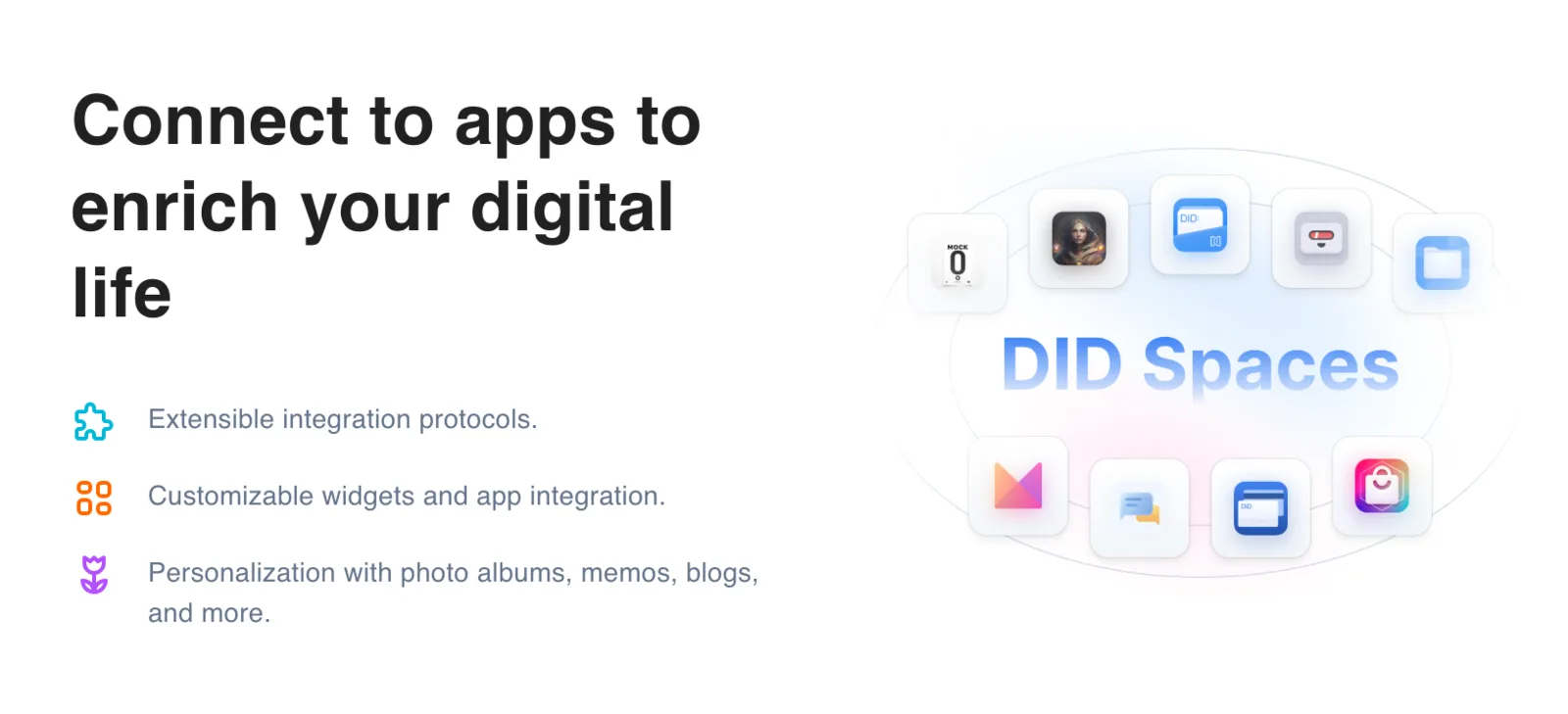
Robert Mao, CEO of ArcBlock, described DID Spaces as a "trusted digital safe" for users' digital lives, featuring self-hosting, application data backup, and high data portability (ArcBlock, 2025, https://www.arcblock.io/blog/en/did-spaces-personal-data-freedom). This article compares DID Spaces to traditional cloud services and decentralized alternatives to highlight its unique position and capabilities.
Comparing DID Spaces to Traditional Cloud Storage: iCloud and Google One
While sharing some functional similarities with services like Apple's iCloud and Google One, DID Spaces differs significantly in user control and privacy.
| DID Spaces | iCloud | Google One | |
|---|---|---|---|
| Data Ownership | Your data, completely under your control | Your data, but under Apple's control | Your data, but managed by Google |
| Data privacy | Your privacy is in your own hands | Depends on company policies | Depends on company policies |
| Are you able to use cloud services? (services hosted by others) | Yes | Yes | Yes |
| Can you self-host the service? | Yes | No | No |
| Network Drive Support | Yes (storage app) | Yes (iCloud Drive) | Yes (Google Drive) |
| Application Data Backup Support | Yes(Any blocklets) | Yes(through iCloud backup) | Yes(Google, Android apps) |
| Application-Specific Data Support | Yes, any app that supports the DID Spaces protocol | Yes, enable iCloud Kit for apps | Yes, Google's applications include Gmail, Google Docs, etc. |
| Isolation among different apps | Yes | Yes | Yes |
| Data Sharing | Yes, controlled by DID | Yes, controlled by Apple accounts | Yes, controlled by Google accounts |
| Data Portability | Yes | n/a | n/a |
| Data backup | Yes | Through 3rd party apps | Through 3rd party apps |
| Pricing | Subscription-based. Free when self-hosted. | Subscription-based | Subscription-based |
| Payment | Credit Card, Cryptocurrency Token | Credit Card | Credit Card |
| Pay-as-you-go support | Yes | No | No include |
Comparison Notes
- Data Ownership and Privacy: DID Spaces grants users full ownership and control over their data and privacy. iCloud and Google One manage data according to their respective policies. Apple encrypts data but may access metadata (Apple Privacy, 2023). Google also encrypts data but uses it for personalized ads unless users opt-out (Google Privacy Policy, 2023).
- Self-Hosting and Ecosystem Flexibility: DID Spaces support self-hosting, unlike iCloud and Google One, reducing reliance on a single provider. It also supports network drives and application data backup for any app using its protocol. iCloud and Google One are tied to their ecosystems (iCloud Drive for Apple; Google Drive for Android/Google apps) (ArcBlock, 2025).
- Data Sharing and Portability: DID Spaces enables controlled sharing via DIDs. While iCloud and Google One offer sharing within their ecosystems, data portability outside is limited. Exporting from Google One can be complex (Google Takeout, 2023). DID Spaces is designed for high data portability.
- Pricing and Payment: DID Spaces offers subscription options, including a free self-hosted option, and accepts credit cards and cryptocurrency. iCloud and Google One are subscription-based, with credit card payments only (ArcBlock, 2023; Apple iCloud Pricing, 2023; Google One Pricing, 2023).
- Isolation and App Support: All three isolate app data. DID Spaces supports any app using its protocol. iCloud uses iCloud Kit, and Google One supports its applications.
- Blocklets: ArcBlock's application units allow application-specific data backup within DID Spaces.
DID Spaces vs. Decentralized and Self-Hosted Storage: MyData, IPFS/Filecoin, Arweave, CozyCloud, and NAS
DID Spaces competes with decentralized and self-hosted solutions, offering a different balance of features and complexity.
| Feature | Solid | DID Spaces | MyData |
|---|---|---|---|
| Storage | Personal Online Data Folders (Pods) | Your personal secure digital space | User-controlled storage (cloud, local, etc.) |
| Data Ownership | Full control within your Pods | You have full ownership of your data | Users control their data |
| Interoperability | Adheres to web standards | Easy sharing with DIDs | Aims for easy sharing |
| Identity | WebID (linked to your Pod) | Unique and secure digital identity (DID) | User-chosen identity options |
| Focus | Data ownership and sharing | One place for all your digital life (data, apps, ID) | Putting you in charge of your data |
| Data Portability | High; easy to move your data | Best: built for moving your data freely | Varies; depends on setup |
| Security | Good; utilizes access controls and encryption | Top-notch: blockchain-level security | Good; focus on user control |
| Use Cases | Personal data, social network, research | Everything: apps, data sharing, secure ID, and much more | Health data, education, personal data management |
Comparison Notes
- Focus and Use Cases: DID Spaces is a secure space for personal data, ideal for sensitive information like health records or personal assets (ArcBlock, 2023). MyData focuses on user-controlled storage across cloud and local setups, aiming for easy sharing but with varying portability depending on the setup (MyData Principles, 2023, https://mydata.org/declaration/).
| Feature | DID Spaces | IPFS/Filecoin | Arweave | CozyCloud | NAS |
|---|---|---|---|---|---|
| Focus | Your trusted digital safe | Share big files fast | Permanent data storage | Simple private cloud | Your hard drive at home |
| Strengths | Easy, private, super secure, future-proof | Fast, cheap, shareable | Forever, tamper-proof | Simple, confidential | Fast, lots of space, you're in control |
| Weaknesses | Newer tech best for personal data | Not for confidential information, potential data loss | Can be costly, and slower access | Limited free space, paid plans can be pricey | Needs hardware & setup, risk of data loss if it breaks |
| Good For | Storing personal info, assets safely | Sharing big files, public info | Archiving, long-term storage | Simple file storage & sharing | Backups, media, home network |
| Data location | Decentralized, you are in control | Global network | Permanent decentralized network | Cloud or self-hosted (your choice) | On your device |
| Access Method | Web, apps, and more to come | Special software or websites | Web browsers | Web or apps | Network connection |
| Cost | Free tier, cheap upgrades | Free use, pay for guaranteed storage | One-time payment based on size | Free tier, paid plans for more space | Upfront hardware cost, plus electricity |
| Technical Skill | None needed | Can be tricky, especially Filecoin | Easy for basic use, harder for complex tasks | Easy, self-hosting is technical | Needs some tech know-how |
Comparison Notes
- Decentralized Solutions: IPFS (InterPlanetary File System) and Filecoin focus on fast file sharing, with Filecoin offering paid guaranteed storage. However, IPFS/Filecoin may not be ideal for highly confidential data (Filecoin Documentation, 2023). Arweave provides permanent storage with a one-time fee, suitable for archiving but potentially slower and costly for large amounts of data (Arweave Whitepaper, 2023). CozyCloud offers simple cloud or self-hosted storage with free and paid tiers; self-hosting requires technical skill (CozyCloud Documentation, 2023). NAS involves local hardware for storage (Synology NAS Guide, 2023).
- Data Portability and Security: DID Spaces prioritizes data portability and security through user-controlled encryption. MyData's portability depends on the setup. IPFS/Filecoin and Arweave offer inherent portability due to their decentralized nature. CozyCloud's portability depends on hosting. Security in DID Spaces and MyData is user-centric, while IPFS/Filecoin and Arweave leverage blockchain principles. CozyCloud focuses on user control, and NAS security depends on user configuration.
- Cost and Technical Skill: DID Spaces offers a free basic tier with affordable upgrades and requires minimal technical skill. IPFS is free, but Filecoin has storage costs and can be technically demanding. Arweave has a one-time cost and moderate technical requirements. CozyCloud has free and paid tiers, with self-hosting being technical. NAS involves hardware and some technical setup.
Why DID Spaces Is a Step Toward the Future of User-Controlled Data
Traditional cloud services prioritize convenience but often at the expense of user control and privacy, subjecting users to corporate policies (Apple Privacy, 2023; Google Privacy Policy, 2023). Decentralized and self-hosted options offer alternatives but can introduce technical complexities, data loss risks, or high costs (Filecoin Documentation, 2023; Synology NAS Guide, 2023). DID Spaces aims to bridge this gap by providing a user-friendly, secure, decentralized solution. Leveraging Decentralized Identity (DID) and focusing on personal data storage empowers users with full ownership of their digital lives. Explore DID Spaces at https://www.didspaces.com.
Listen to the Podcast Overview
Referenced here
Products
-
DID Spaces
renamed
A data space associated with a DID. Create a personal space, or connect an application with the permissions and data model its task requires.