DocSmith vs. DeepWiki: A Developer's Guide to AI-Powered Documentation
In the world of software development, clear and comprehensive documentation is not just a "nice-to-have" – it's a necessity. But let's be honest, creating and maintaining lear, useful documentation isn’t optional. It’s how teams ship, onboard, and avoid rework. Writing it, though, takes time most teams don’t have. AI doc tools try to help by turning code and context into usable docs so developers can focus on building.
Two tools get a lot of attention: AIGNE DocSmith and DeepWiki. Both use AI to generate documentation from your codebase, but they aim at slightly different jobs. Below is a quick look at each, a side-by-side comparison, and where DocSmith tends to fit best.
Introducing the Contenders
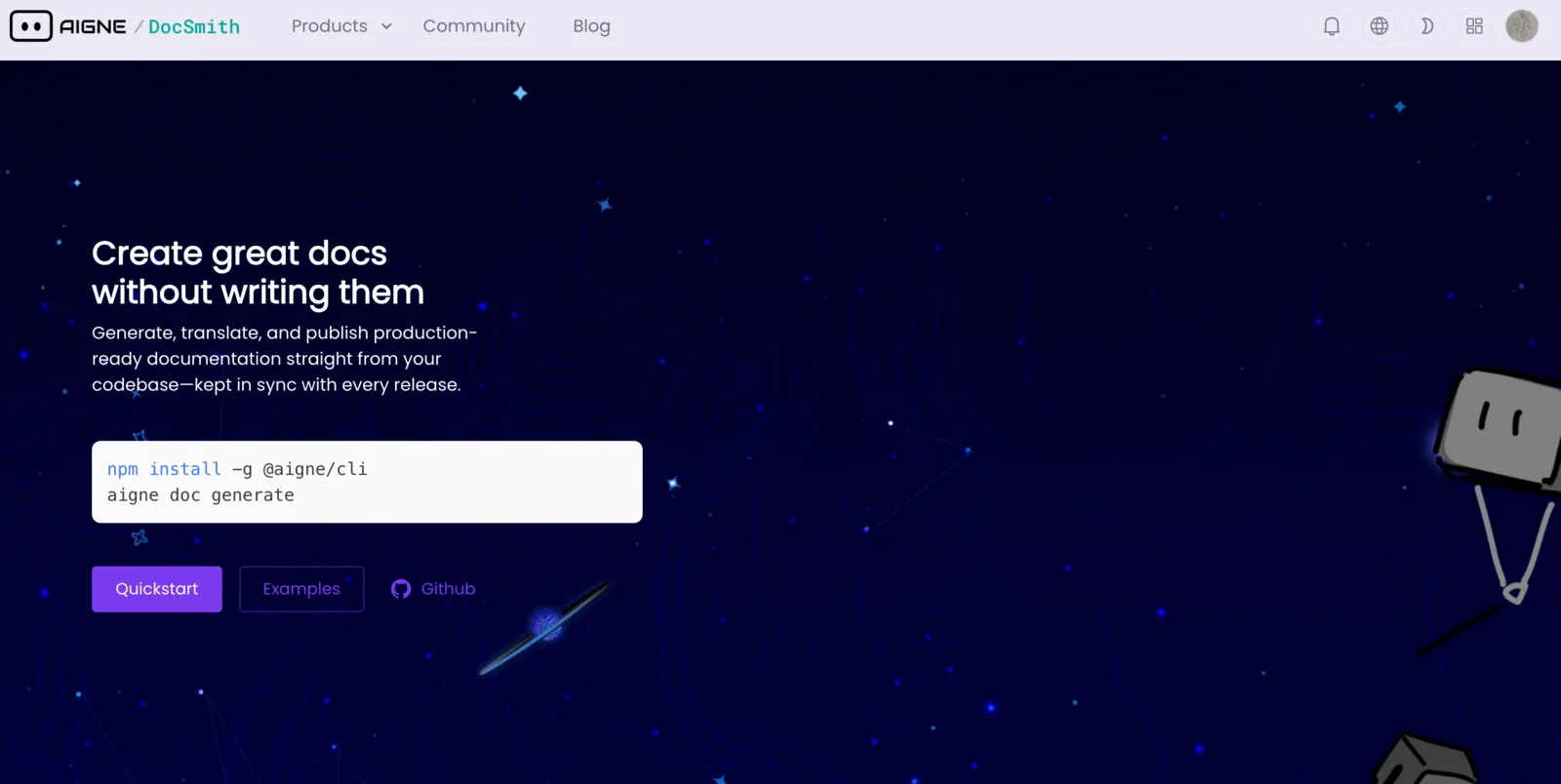
AIGNE DocSmith is a powerful, AI-driven documentation generation tool built on the AIGNE Framework. It automatically analyzes your codebase and generates comprehensive, structured, and multi-language documentation that stays in sync with your code.
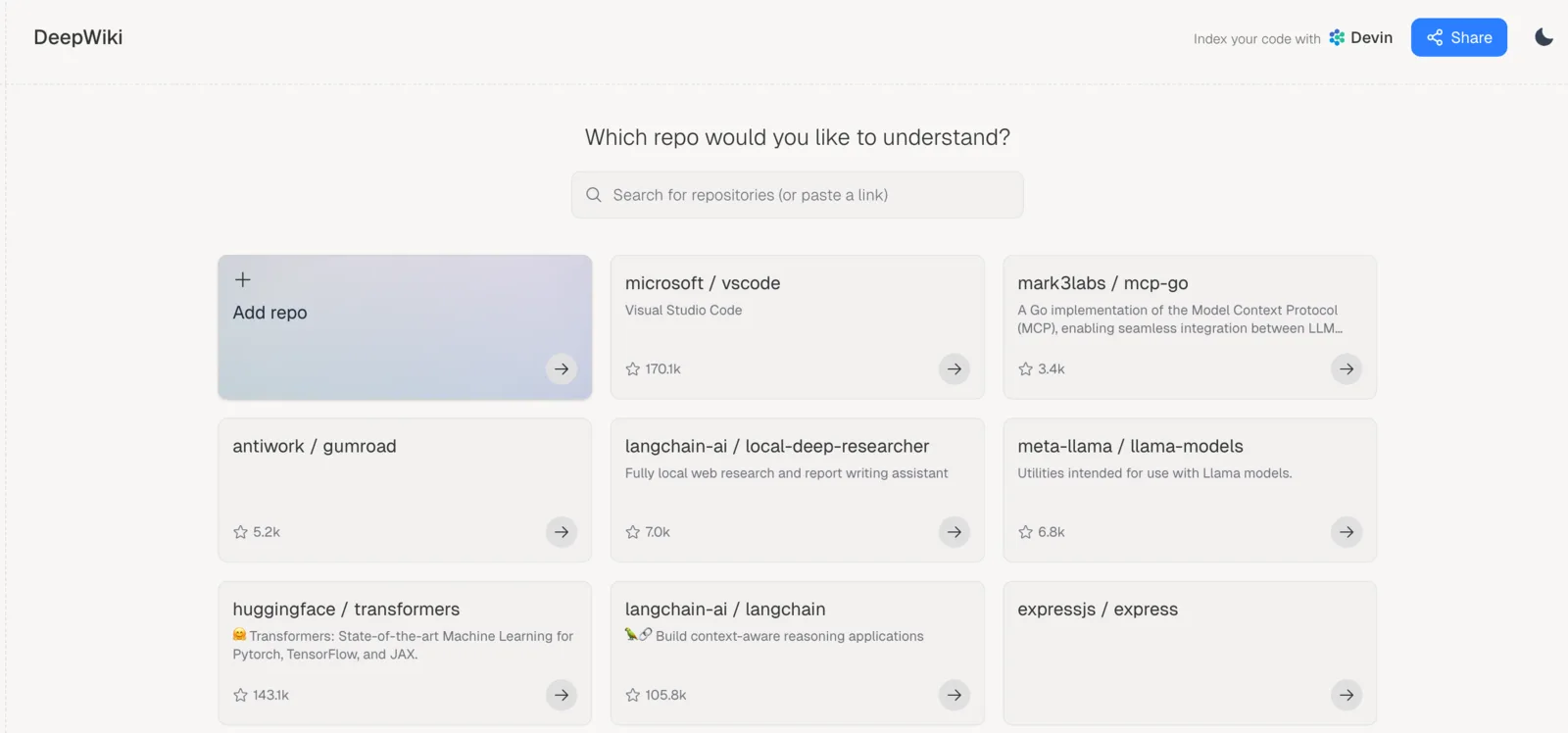
DeepWiki, from the creators of Devin, is an AI-powered tool that helps you instantly understand the architecture, logic, and core functionality of any public GitHub repository. It acts as an intelligent, auto-generated wiki for your codebase.
Side-by-Side Comparison
| Feature | AIGNE DocSmith | DeepWiki |
|---|---|---|
| AI-Powered Generation | Yes | Yes |
| Multi-Language Support | 12 languages with professional translation | Not explicitly mentioned |
| Seamless Integration | AIGNE Hub, multiple LLM providers (Google Gemini, OpenAI GPT, Claude, etc.), one-click publishing | GitHub, Jira |
| Smart Updates | Automatically detects changes and updates documentation | Not explicitly mentioned |
| Customization | Multiple documentation styles, target audiences, and source paths | Configuration through .devin/wiki.json file |
| Pricing | Free for communities, paid plans for teams. | Free for public repositories, paid plans for private repositories. |
| Unique Features | - Adaptive writing styles - Glossary integration - Team collaboration features (Enterprise) - Custom branding (Enterprise) - API integration (Enterprise) - Analytics (Enterprise) | - Architecture diagrams - Semantic search - Context-grounded Q&A - Interactive diagrams |
DocSmith's Unique Capabilities
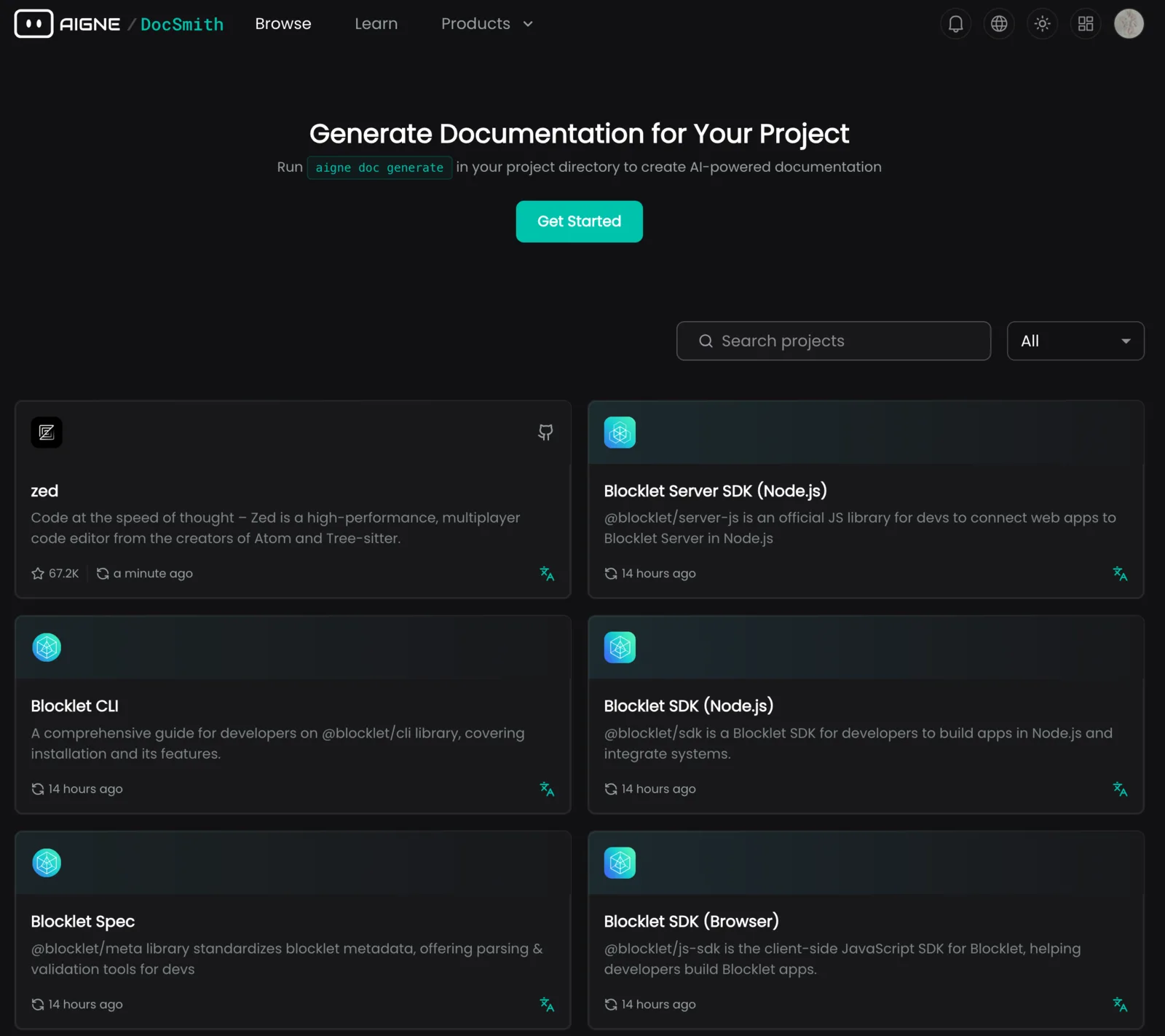
While both tools are capable, DocSmith boasts several unique features that make it a great choice for developers and organizations:
- Multi-language done right. DocSmith supports 12 languages with context-aware translation. A shared glossary keeps terms consistent across languages, which matters for technical docs and global teams.
- Model flexibility without key juggling. Through AIGNE Hub you can choose Gemini, GPT, Claude, and more from one place. Use what fits your quality, cost, or data needs. Bring your own keys if you prefer direct access.
- Updates that track your code. When code changes, DocSmith can refresh the affected docs so you don’t carry stale pages. Version awareness keeps a history of what changed and when.
- Coverage beyond API refs. DocSmith can generate user guides, how-tos, overviews, and deep dives. “Smart Structure Planning” proposes a logical outline so you don’t start from a blank page.
- Enterprise options when you grow. Collaboration controls, custom branding, API hooks for CI/CD, and analytics are available for teams that need them.
Conclusion
Both tools reduce the manual lift of documentation.
- DeepWiki is strong for fast understanding of a repository’s structure with diagrams and Q&A, especially for public GitHub projects.
- DocSmith suits teams that want broader, customizable documentation that stays aligned with the codebase, supports multiple languages, and can fit into existing pipelines.
If your priority is quick architectural insight, start with DeepWiki. If you need ongoing, multi-language docs that update with your code and scale with your team, DocSmith is the better fit.
Referenced here
Products
- DocSmith superseded
Generates and maintains documentation alongside the code it describes, including multilingual versions. Its work has been taken into ARC; the standalone tool is no longer maintained.